
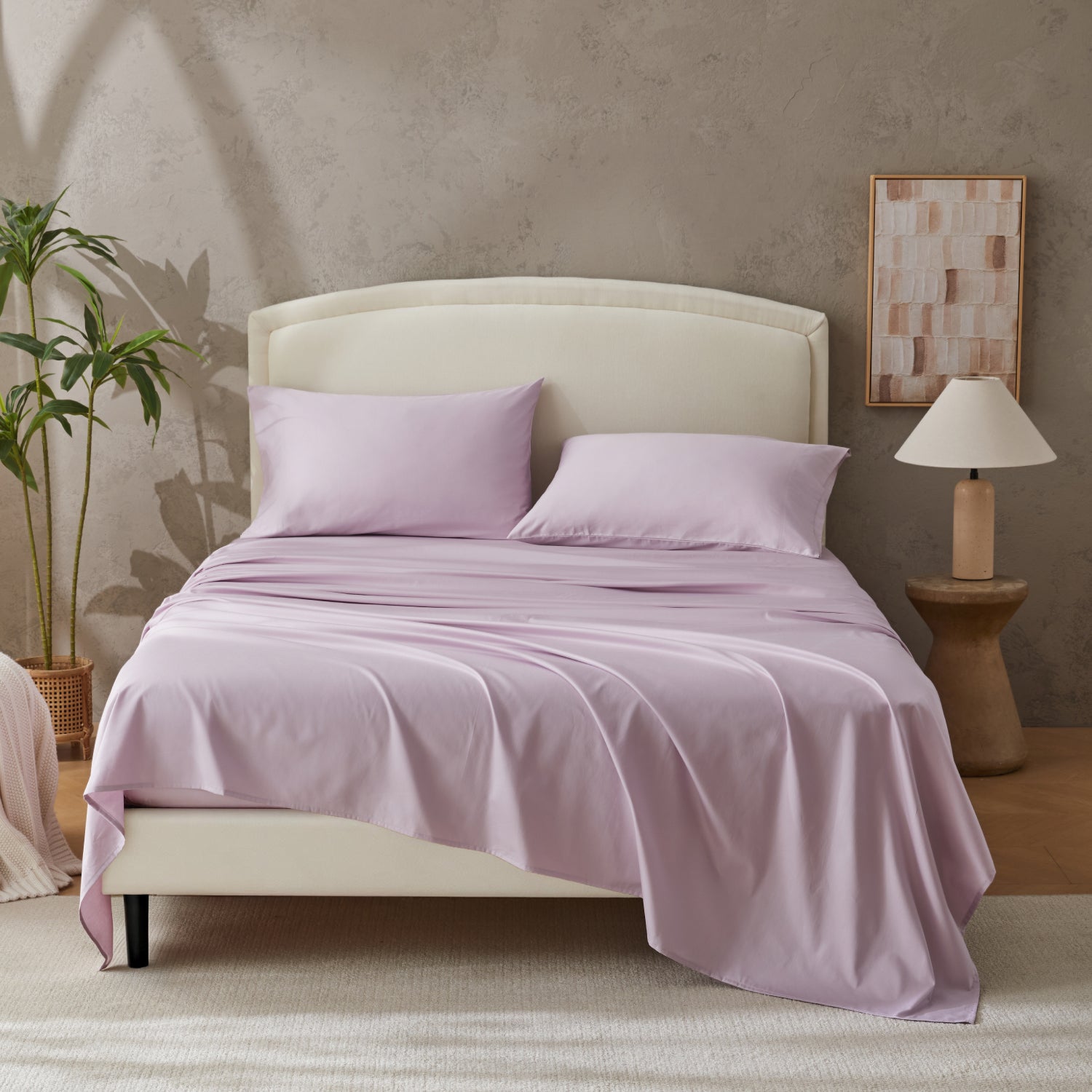
🛏️The Secret to a Perfectly Made Bed: It's All About the Size
Have you ever experienced this frustrating moment: you've successfully fitted two corners of the sheet, but the last two simply refuse to stay put? It's usually not about a lack of strength—it's about picking the wrong size.
Stop struggling with loose or overly tight sheets! Our latest guide takes a deep dive into standard mattress dimensions, covering everything from a Twin to a California King.
Whether you are buying a brand-new bedding set or hunting for second-hand treasures, this guide will help you master the art of measuring and matching, ensuring a perfect, "tailor-made" fit for your mattress.
Bed Sheet Sizes Chart
Bed Sheet Sizes Chart
| Size | Mattresssize (in) | Mattresssize (cm) | Fittedsheet size | Flatsheet size | Duvetcover size |
|---|---|---|---|---|---|
| Twin | 38” x 75” | 96.5 x 190.5 cm | Twin | Twin | Twin |
| Twin XL | 38” x 80” | 96.5 x 203 cm | Twin XL | Twin XL | Twin, Twin XL |
| Full | 53” x 75” | 134.5 x 190.5 cm | Full | Full, Queen | Full, Queen |
| Queen | 60” x 80” | 152.5 x 203 cm | Queen | Queen | Queen |
| King | 76” x 80” | 193 x 203 cm | King | King, Cal-King | King, Cal-King |
| CaliforniaKing | 72” x 84” | 183 x 213 cm | Cal-King | King, Cal-King | King, Cal-King |
🧩Types of Sheets
Don’t know the difference between a fitted sheet and a flat one? Here’s a quick guide on the types of sheets you’ll encounter when shopping for bedding.
Fitted Sheets
A fitted sheet is designed to fit perfectly onto your mattress. It typically has elastic in the corners to help the sheet grip onto the mattress.
Fitted sheets need to be specifically sized to complement the mattress dimensions. If the fitted sheet is too big, the sheet will fall off. If it’s too small, you’ll have trouble getting the elastic over the mattress corners.
Look for deep pocket sheets in your fitted bed sheet search to prevent it from slipping off your mattress. They’re perfect for if you have a mattress pad or topper that adds extra height to your bed.
Flat Bed Sheets
As the name suggests, flat bed sheets are meant to lie flat on the mattress. They should be larger than the mattress surface. The extra fabric that hangs over the sides is then tucked under the mattress.
📏How Do You Measure a Fitted Sheet?
If you’re still unsure if a fitted sheet will fit your mattress, you can easily measure it and find out.
- Remove any sheets from your bed and measure the width and length of your mattress. Then measure the height of your mattress, being sure to include any mattress toppers. Write these dimensions down. Your fitted sheet should match or be slightly larger than these dimensions.
- Next, measure your fitted sheet. Lay the sheet out to find which side is the length (the longer side). Measure from one corner to the other to find the length measurement. Then measure the shorter side, from corner to corner. This is the width. Lastly, take your fitted sheet and measure along the pocket seam. This will tell you the height.
- If these measurements are equal to or slightly larger than your mattress measurement, the fitted sheet should fit. If they are much larger, the sheet might bunch up in the night and come off. If they are smaller, the sheet will not fit.
💡FAQs About Bed Sheets
How do I pick sheets for ontraditional mattress sizes?
Measure first—nontraditional beds don’t follow standard sheet charts. For example, an Olympicqueenruns about 66" x 80" (wider than a standardqueen), while an Alaskankingis a massive 108" x 108". Specialty sheet makers often carry thesesizes, or you cansizeup and tuck if exact fits are hard to find.
What’s the difference between a bed sheet and a bedspread?
Sheets are the layers yousleepdirectly on or under—fitted sheets hug your mattress, flat sheets cover you. A bedspread is a decorative, top most layer that covers the entire bed, often all the way to the floor. Think of sheets as the comfort players in your sleep setup, and a bedspread as the finishing touch.
How often should you wash your sheets?
You may have picked the right bedding, but how often should you change your sheets to get the most out of your purchase? Most experts recommend washing sheets once a week. That’s often enough to clear away sweat, skin cells, and allergens that build up while you sleep. If you share your bed, sleep hot, or have allergies, you may want to wash more frequently. Rotating between a couple of sheet sets makes it easier to keep things fresh.
